Showing posts with label book. Show all posts

Monday, June 8, 2015

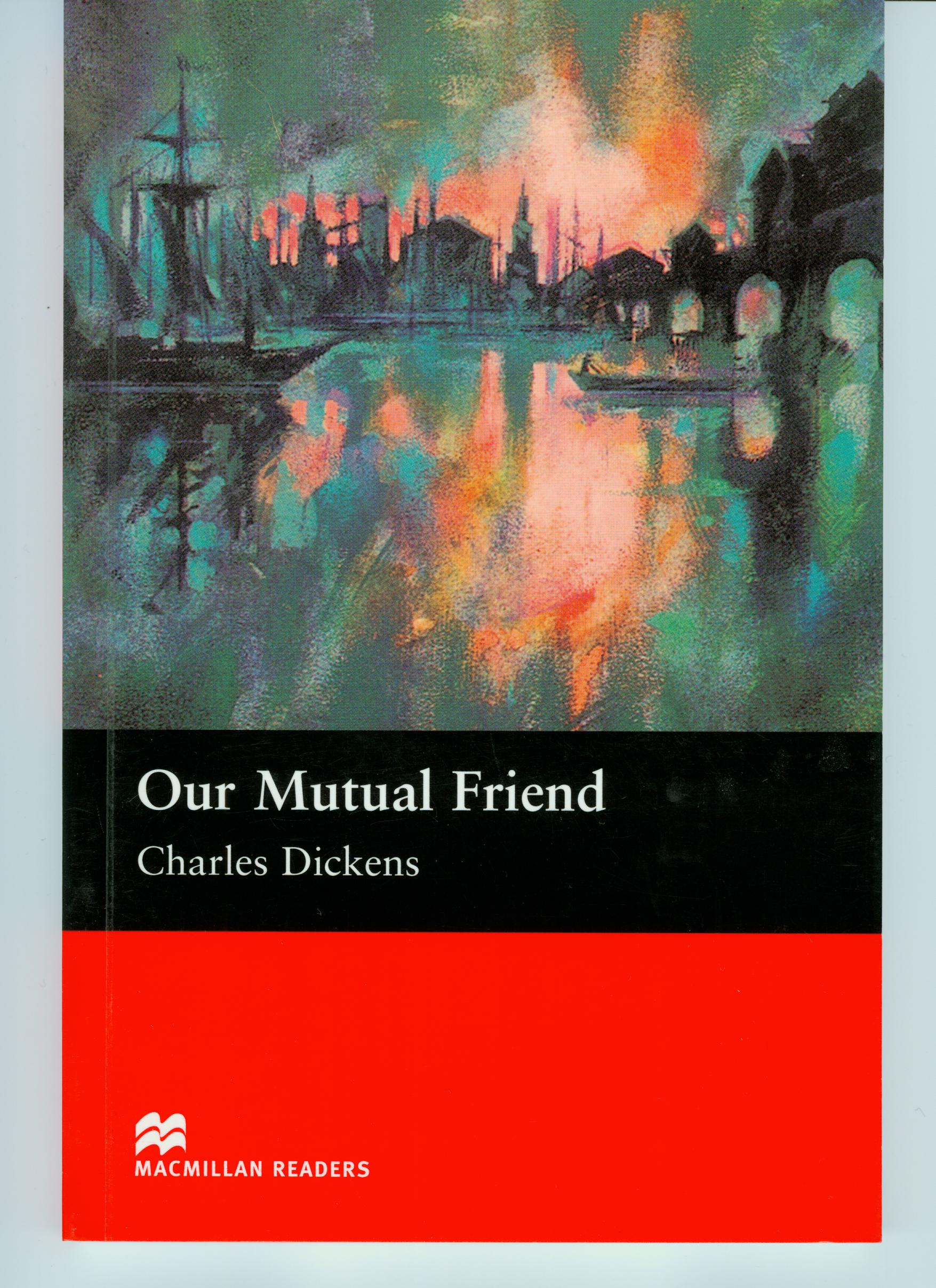
Our Mutual Friend by Charles Dickens

Review by The Quidnunc


As an ex-student in British & American Literature, it meant a great deal to go back and re-read the last finished book of Charles Dickens. Published in 1865 Our Mutual Friend is the very last experiment of the author in combining his unearthly psychological instinct and his gift for social analysis.
Although, the novel is know as one of the Dickens' weakest literary performances due to its artificial taste (Henry James), I believe it still is a work with a proper place in English Literary History.
As I sank into its first paragraphs I couldn't but feel as if watching a Fellini movie... the opening scene, especially, when father and daughter are corpse scavenging the banks of Thames in the stillness of the night. I admit my vivid imagination draw a first impression of London filled with horror and mystery that grabbed hold of my attention and didn't let go until the very last page of the novel.
Dickens' talent for reading and building character personae is, of course, undeniable but in Our Mutual Friend he also reveals his gift for mirroring the exact societal preferences of his age, and the peculiarities of class distinction and communication of the times. 
In short, his last novel is about MONEY and their effect on people who yearn to obtain them and on people who already have them. The deadly breath of money hovers upon each and every character of the novel. To escape this Dickens relied heavily on the idea of rebirth and renewal. He filled the novel with the taste of Thames. Water is the symbol of life and new beginning throughout the whole plot. John Harmon and Eugene Wrayburn both "drawn" their old lives in the river to give themselves a chance of new life. In the case of Harmon - he chooses to fake his own death to ensure himself a chance of getting to know his future wife and to reassure himself as not dependant of his father's will and money. And Wrayburn, who is supposed to die young, resurrects himself to correct his mistake, marry Lizie and live a long and happy life with her.

While in many ways Our Mutual Friend is undoubtedly flawed, there are some strengths of the novel that have to be underlined. The omniscient narrator, so typical for Dickens, is an inseparable part of his last novel as well, making its voice distinct and strong and helping the author get away with everything that irritates his true fans. Our Mutual Friend captures us with its bold sentiment, its pathos and mostly with its drama. You can swallow the novel whole without even thinking twice for the after taste. The light-hearted moral conviction of the last page when Twemlow reveals his steel, grabs the whole of you and leaves you with the feeling of knowing "the whole spirit of the English people."
On the positive side, with no regret, I can call Our Mutual Friend  a story of a life time, regardless of its downfalls, because for what it lacks in plot it makes up for in darkness of villains and depths of characters and setting. And to be honest its flaws are what makes it still so readable.
One thing is sure: it definitely is a novel  for the ages; a story to be visited and revisited many-a-times for everyone needs their little adventure on a boat upon the river of Our Mutual Friend.


Wednesday, June 3, 2015

White Teeth by Zadie Smith

 Review by The Quidnunc


 I begin my journey around literary London with a novel that stirred a considerable amount of discussions not only in the UK but all over the world. I admit I haven’t read it prior to this project and it left me with the same mixed feelings it left quite a lot of us.

The book itself was published a good 10 years and a bit ago and was instantly marked as a modern classic. The author, then the 24-year-old, graduate from Cambridge Zadie Smith instantly was compared to Salman Rushdie… a comparison as much as can I agree with, I can also define as a prize given way too early to a rising literary star.

There were a couple of literary parallels that I drew from the very first paragraphs of the novel. The first one was quite obvious, as many other critics drew it as well. It was with Middlesex by Jeffrey Eugenides, but the second one was quite surprising even to me – The Gargoyle by Andrew Davidson. The later parallel was based more or less on the mechanical taste of following a recipe for writing the book left me with. But on that matter I will elaborate a little bit later.

On the whole it is with a huge sigh of relief that I can say that White Teeth bites indeed with ease on the problems of contemporary society, echoing perfectly the voices and problems of the average immigrants like myself. Its religious references draw a masterpiece of understanding of the acceptance and the idea of make-pretend life that most immigrants come with to the huge metropolis. In its various manifestations the book can be characterized as an immigrant novel, a family drama, pro- or anti-religious satire, but in its essence it is written as very mature life story - such as it is, without frippery, no idealistic impulses without search lessons and revelations.

On its pages we get familiar with lives of three families, all of them flawed just like regular families, all of them close to us, almost as if we have their members mixed with our own kin. Six parents keep together seven children – six boys and a girl – robbing them of all freedom and defining them by culture and family standards as they were defined themselves by the metropolis. As I look back to the book I cannot but keep wonder how did Smith manage to intertwine so flawlessly all events – internally logical or not – to show how every single character evolved and transformed through this 50-year span of the plot.


Loosely sketched, the lines begin to build so - collecting almost committed suicide on the front pages of British Archie big, confused Jamaica Clara, grown in heavily distorted religious family of Jehovah's Witnesses waiting for decades how every moment will come the end of the world when we take power with Jesus and sinners will be buried. Archie brings strong with Samad, a native of Bangladesh who have bizarre experiences of the Bulgarian-Greek bond during the Second World War, and they start living your own life in a strange pub, where time has stopped, new people do not enter, and no change is an appreciated constant. Samad is married to Alsat, exuberant and powerful woman who is promised even before birth. Both families are in constant dependence from one another and have children the same age - Eyre, the daughter of Archie and Clara, and twins Milan and Majid of Samad and Alsat. Gradual detachment from reality causes Samad to sink into the obsession with his supposedly heroic ancestor, trying to change the community around themselves in their own perverse measures, and even to kidnap one of his sons and send him back to Bangladesh to continue the traditions of the family.

Somewhere in between the whirlwind Zadie Smith introduced the last piece of the puzzle, perhaps a little too late, but giving solidity of the whole structure - the family of Marcus and Joyce Chalfan, idyllic formation with four sons, total internal confidence, self-reliance throughout the world, almost perfect example of a loving family parents who follow their vocation, one in botany, the other in genetics and simultaneously fail to educate their children in their own image almost to caricature degree. In this perfect microcosm crumbling at the edges because of entropy, Eyre and invaded Milan, overturn everything upside down. Swamp of colorful characters, mutual need and mutual hatred, unconscious sexuality and misunderstood psychological dependencies ... three families become inseparable in a veritable amalgam of aspirations, desires and frustrations. Like a modern Adam’s family they both serve as pointers to the flaws of society but also trigger some empathy. What makes them so approachable to the modern immigrant and person is that like most of us they have surrendered themselves to destiny.

I definitely loved the novel for its multiple religious, pop cultural and literary references and also for its amazing sense of humor (after all I am a serious Neil Geiman and Douglas Adams fan.) I admire its writing style and its ability to use ordinary clichés as a starting point to a journey whose end is unforeseeable. But most of all I loved White Teeth for portraying London as a stripped ex-colonizer that became a top migration destination and a melting pot that leads the way to a new world of mixed cultures and traditions.

The stories of Archie and Samad are stories of hope and impossibility, redemption and damnation, of being similar but somehow different and polar. As an immigrant myself, I see White Teeth as a very decent portrait of the average person trying to build a home in a world where nobody truly belongs, and if it wasn’t for the ups and downs in the plot’s pace and for the too predestined outcomes it would have deserved the prize it got from all those critics. Personally, though, White Teeth just needed a pinch more to be a grand masterpiece and to touch my heart.