Showing posts with label the quidnunc. Show all posts

Monday, January 25, 2016

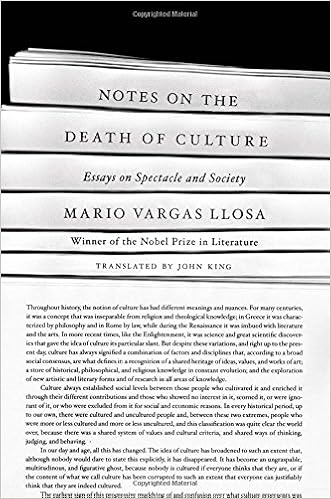
Notes on the Death of Culture: Essays on Spectacle and Society by Mario Vargas Llosa

Notes on the Death of Culture: Essays on Spectacle and Society is a provocative essay collection on the fast decline of intellectual life, and one that manages the dual feat of shedding light while spreading gloom. As with the artful Freudian wink in the title of Mohsin Hamid’s recent collection Discontent and Its Civilizations, Vargas Llosa’s title is a sly reworking of another seminal title, namely T. S. Eliot’s 1948 essay Notes Towards the Definition of Culture. The six essays that comprise Notes on the Death of Culture can be taken as a response to, or even an update on, Eliot’s argument.
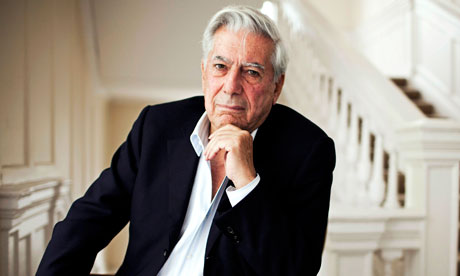
Vargas Llosa has thrown the provocative gauntlet into the face of the modern world. He challenges those who defend undefendable "art & literature" by proclaiming that the modern age does not have culture, so much as spectacle and technology.
I’m a fan of reality; I attempt to understand the world. Therefore, I find this essay collection a magnificent piece of critique on the down slope trail culture has taken. There is not a single statement in that I would argue with for for the first time in years I heard a critical voice long forgotten in the world of publishing.
Vargas Llosa is that long awaited knight on a white horse that if strong enough will be able to shake things up in the art world. For year I have been fighting with my own opinions of the modern art and literature, struggling with self doubt and insecurity. Thinking "I must have gone bonkers for not appreciating it" and than here is that wonderful man who agrees with me and who gave voice to the same taughts that have being fighting to get out under my own pen. 
South America's most influential novelist, thinker and revolutionary, writes for the common man a critique of our culture obsessed with itself to the point of self-annihilation. It is accessible, concise, eminently readable, and unforgettable.
Although, very few people with read it, I do believe it is one of the most important books on culture for the last decade.

Monday, January 18, 2016

The Satanic Bible by Anton Szandor LaVey


Published in 1969 it is more a collection of essays, observations and rituals than an actual religious ideology. While reading it I didn't find my expectations satisfied. Surprisingly, there is nothing demonic about Satanism, rather it is a humanistic approach towards life that serves to ensure calm and long-lasting existence.
I myself am an atheist by conviction, but reading through this collection of essays I found myself agreeing and nodding to most of the conclusions or advises in it. I would safely advise all mums out there who freak out over seeing their teenagers reading it "Fear Not!".  Satanism is completely different than Satan worship and frankly, this book might be of more help to answer his/her questions rather than turn him into the Devil itself.  If you ever read Nietzsche's philosophy you'd know that Satanism is a very safe rendition of most of his ideas. There is nothing scandalous about The Satanic Bible, which was I admit somewhat disappointing, but yes, all fanatic Christians out there would probably burst into flames.... *evil laugh*.
The first half of the book expounds upon his theories. This section is much more relaxed than I expected. He speaks off the cuff, using slang and humor. It's an interesting approach to the writing of a religious text. Definitely a relief from the stuffy Holy Bible. By the way, any Satanists reading this can relax. Yes, I'm bagging on your boy a bit here, but I also think Christians are ridiculous, too. I'm one of those people who has faith in themselves, that they will do the right thing. So far I'm doing all right. Haven't murdered any one yet!
Later The Satanic Bible gets into the whole "spell casting" thing, the reason I bought the damned book in the first place. Much is made of sex, blood essence, speaking accursed names aloud and none of it was as cool as I'd hoped. I did like that LaVey calls out the people who sacrifice animals as cowards for not having the balls to draw their own blood for these rituals.
The last half of the book is a very short, quick read. There's barely more than a dozen lines on some of the last hundred or so pages. Sometimes it's just a title page or one simple sentence and blank space on the back side. This was done for aesthetics and it's a big waste of paper. The book would be a lot smaller otherwise.

Wednesday, January 13, 2016

Five Quarters of the Orange by Joanne Harris

This is the fourth book by Joanne Harris that I've read (I've previously read the Chocolate trilogy) and while this was very much a different kind of story from the others I've read, some things seem to carry throughout Ms. Harris' writing. All of the books I've read have been primarily set in small French villages, food and drink play a big role in all, and the relationship between a mother and daughter is a key piece of the plot. Oh yes, and what I call "Frenchness" for lack of a better word.
With the backdrop of the German occupation and none of the magical realism of those books, this book had a darker tone than the trilogy. As so many books have done of late, here Harris blends together a story from the past with a story from the future. Fortunately, both of them belong to Framboise and she is a character well worth exploring, both as a willful, unhappy child and as a sad, bitter adult. Although it lacks some of the charm of the first two books of the trilogy, Harris gets a little carried away with the food names, and it's certainly much harder to feel sympathy for what Framboise suffers as an adult, I enjoyed this book. As did most of the other reviewers found on the Barnes and Noble web page. Except, of course, Kirkus Reviews, which called the book "overwrought" and a "melodrama." And it is, a bit, but that doesn't make it any less enjoyable for fans of Harris who are looking for exactly what I found in this book...food, family, and Frenchness.
What a terrific novel. It starts off like a liqueur chocolate: when you first pop it in your mouth, you are not quite sure what it will taste like. Then the further you go, the secret of the interior starts to reveal itself slowly until you are totally absorbed in its content. Couldn't put it down - a simple interwoven story, told beautifully. A must-read.

Monday, January 11, 2016

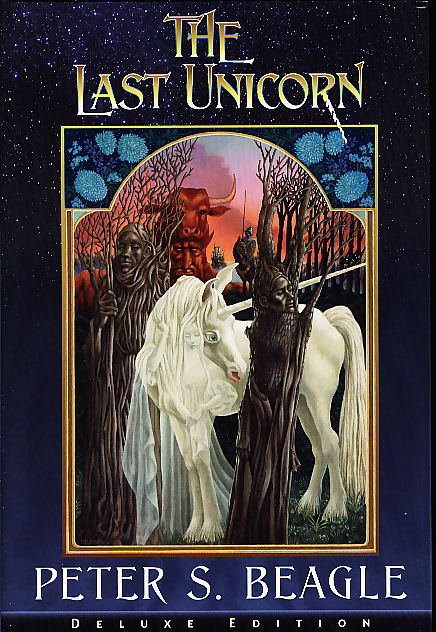
The Last Unicorn by Peter S Beagle

"The Last Unicorn" is a tale that bewitches our reading senses; it is a beautiful story, gentle metaphor, longing and a lust for the beautiful, captivating narrated dream about the dream, it is Swan Lake, it is Casta Diva, it is a Monet.
In this journey of magic that has brought so much grief in transition, through the intelligent humour to the touch of the unicorn. When touched by a unicorn you never stay the same, you become the always looking for his trail, the always employing such deeds that would bring the unicorn delight and occasionally in your eyes green leaves will flash, gurgles will flow and small animals will run. In those minutes or seconds you will stretch to eternity, to the true, unattainable for us humans freedom and Grom red bulls his way.
For me, this story is not fantasy and somehow it did not fit into what we used to expect from the genre, the world of the book is not massive, epic, it is missing in numerous races and original spells. "The Last Unicorn" is a fabulous metaphor of life, quietly touching sense immortality caught by a peripheral glance, art or just the most beautiful appearance.
The style is interesting and unusual, the translation is more than wonderful, and the most amazing is that the story is filled with humour, which balances the pursuit of imaginations, and philosophizing us back to earth. However, even when galloping with unicorns, we remain mostly people.

I'd like to write more things, thoughtful and loud, I wish I could convince more and more people to read it. It's hard to find words, especially when it comes to such work. Indeed, this is just a fairy tale, but it is so current, diverse and real as life. Is not life Red Bulls and rulers who have lost their heart's desire, because it achieved? Such without longing that we offer only the wilderness of their own looted and sold soul? Do not cowards exist, as residents of Hagsgate that make their power possible?
Do not remove bored by hand, do not let them say - these are children's stories, real life is much more complex. Do not be part of that smug majority, which convened with badness in our lives and then justifies the complex life and stock indices. Do not neglect this small but valuable book, take the time for it and it will pay off with a real touch of a unicorn and a flash of green leaves in your eyes.


Thursday, August 27, 2015

About a Boy by Nick Hornby

Reviewed by The Quidnunc


Will is a 36-year-old child that never bothered with serious matters. He suffers from the Peter Pan syndrome so badly that he hungers to stay as hip as any teenager. He jumped straight from the pages and right into my heart. Although naive and breezy the novel is enjoyable and manages to surprise you even with a little depth.
What I absolutely adored about it is the lack of any pretensions what so ever. I am so tired of reading books that aspire to be so much more than they have the potential to be, that I was toppled by the simple, honest charm of this unexpected and definitely unintended masterpiece.
Hornby does a wonderful job creating realistic characters who suffer from as much unlikeability as real people would. I am part of a generation spellbound by the perfect unison of romantic and cynic and "About a Boy" is that, but also so much more.
In a world organized around the idea that childhood is meant to last forever, why would anyone bother to defy the labyrinths of adulthood? These conflicts wouldn’t ring as true to me without the constant references to the good, the bad and the ugly of the phonographic industry at that time. It’s possible to grasp a variety of unwritten aspects about the boy and his messed up folks simply because Hornby’s writing makes me hear a multitude of tones (sometimes mere noises) travelling through their trajectories and, somehow, making them who they are. Hornby's musical sensitivity is always present, even when he doesn't directly mention anything about music: there's a peculiar rhythm in his language I can recognize and listen to it for hours, like one of those killing tunes I used to listen during my teenage years, when I would lock my room, light an incense, turn off the lights, put on my favorite CD (Radiohead? AlanisMorissette? Nirvana?) and repeat the same track as a mantra, wondering when my personal turmoil of agonies and expectations would finally end. Luckily, that bizarre phase did end one day, but the music survived. Not specifically the same music I used to dig at that time, but the need of music itself: there’s always a certain song I HAVE TO listen over and over and over with my eyes shut because it’s just that irresistible, a metaphysical experience almost. Hornby portrays this sentiment incredibly well, and is able to compose the narrative as one very captivating song by assimilation.
Now there’s one thing: this book won’t change your life. it’s just about a ridiculously immature guy trying to pick up women and have a suave existence, but things rapidly change when he meets an unhip kid and his depressing mom. Nothing so special about the plot as you can see, but I would give Hornby a chance. His music really is addictive.

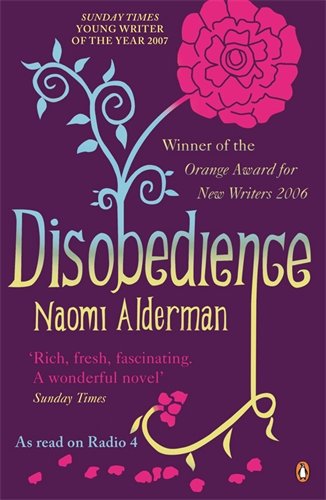
Disobedience by Naomi Alderman

Reviewed by The Quidnunc

"Disobedience" as a Jewish-world-revealed type of novel. Firstly, I should probably mention that I am not a particular fan of books that tell the stories of religious struggling and religious communities. You see, religion and I, we don't get along very well. However, I will attempt to be as objective as possible when judging Disobedience. 
The story alternates the perspective of Esti, a not-altogether-happily-married observant Jewish woman, with that of Ronit her childhood friend. The women are reunited when Ronit returns to Hendon after the death of her father, a much esteemed Rabbi. The two viewpoints shed light on what is good - and what is a little less good - about life in a tightly-knit Orthodox community.
Each chapter begins with a discourse on aspects of Jewish beliefs and practices. These passages serve to lift the book beyond being just one more 'feel-good' story about women re-evaluating their lives. Although, I admit they were very educational for someone who is not familiar with the Jewish tradion, I found them annoying and boring. It seems they stole the colour of the pages of this otherwise decent novel. 
Most of the time I was haunted by the feeling that Alderman followed a recipe for writing rather than her own voice. And this is what lead to the very Lenten sense of humour. It was funny at times, but mostly it was just a sad attempt of sense of humour. 
One of the obvious disadvantages of the novel is that the principals, and the world of the Orthodox (Jewish) British community is presented in such a compelling detail that it becomes almost claustrophobic for someone as free minded as me.
But I guess a novel like this takes a bit of warming up time to take in. It's incredible to think that this book was written by such a young woman. It is wise beyond her years. Much of it has an omniscient narrator whose range extends from ironic commentary on the quirks of the Orthodox Jewish community to Torah lessons that I was still pondering days later. The contrast between that all-inclusive narration and Ronit's brash, self-absorbed first-person voice helps set up the problems of the novel.
With this said I am not surprised it won the Orange Award for New Writers, BUT I will not dare recommend it to any of the readers I know, for it just lack severely in character.

Tuesday, August 11, 2015

A Room with A View by Edward Morgan Foster

Review by The Quidnunc


This one was a very hard for me to review, not only was I confused by the chaotic structure of the novel, but was also mesmerised by what seemed a deliberate rejection of controlled style to reflect the messy complexities of the human hear. You did it Mr Foster: I have become yours truly. Once more you managed to remind me how fiction should make the reader feel both for and through it. I do realize of course that this may sound to the least a bit childish, but that does not miniature the obvious the theme, mechanics of plot and vicissitudes of characters A Room with A View possess.
Foster's novel makes us feel as Heraclitus would put it: "Estranged from that which is most familiar."
Our story begins in Florence, Italy, where two English women, Lucy Honeychurch and her spinster cousin Charlotte Bartlett, are at a hotel full of other English tourists. They are displeased with their rooms, which don’t have a pleasant view from their windows, but a pair of unconventional fellow guests, Mr. Emerson and his son, George, offers to switch rooms with them. This sparks a whole discussion of what is proper and what is improper, a dialogue that continues throughout the book. Eventually, the women take the Emersons’ offer, only after a visiting pastor, Mr. Beebe, convinces Charlotte that it’s okay.
The majority of the hotel guests are still unconvinced that the Emersons are socially acceptable, though. Lucy, who realizes early on that Mr. Emerson is actually just an old sweetie-pie who doesn’t play social games well (or refuses to), is saddened by the attitude of the other guests towards the quirky father-son duo. We see that she’s confused and not entirely convinced by the strict rules and regulations of “good” society, and that she’s tempted to follow her own emotions sometimes, rather than just doing as she’s told. She wishes something would happen to her – and it does. She and George both witness a dramatic murder in a Florence square, and both are irreversibly changed by it (as we all would be, no doubt). This makes Lucy realize that life is not as simple as she’d thought it was up to this point in her life, and she begins to slowly question her belief in the social order she grew up with.
The plot gets thicker when the guests at the hotel go on what is meant to be a pleasant drive in the country. When they arrive at their destination, a particularly beautiful “view” from a hilltop, everyone wanders off to explore. Lucy inevitably (though unintentionally) finds George, and, overwhelmed by the beauty of nature and the beauty of Lucy herself, he kisses her. She is shocked! We are shocked! Charlotte, who accidentally witnesses the kiss, is shocked! Part One of the book ends as Charlotte and Lucy beat a quick retreat from Florence, attempting to avoid any further complications with George and his father.
Part Two takes us back to Lucy’s home in pleasant southern England, Windy Corner. We meet her family (her charming mother and her adorably ridiculous brother, Freddy), and her stuffy new fiancé, Cecil Vyse. Cecil is not exactly a barrel of laughs, but he certainly thinks he is. Through Cecil’s devious and rather cruel maneuvering, the Emersons end up moving into the neighborhood. Their previous relationship with Lucy is a total coincidence – Cecil’s a fool, not a monster! He doesn’t know about Lucy and George’s fraught relationship, and he only brings the Emersons to town to provoke a local landowner, who’s concerned with finding the “right” kind of tenants. Everything converges upon Lucy: George, who she secretly loves (it’s a secret to her, too), Cecil, who she thinks she loves, her family, Mr. Beebe the pastor, and, to make matters even worse, Charlotte. Windy Corner is suddenly a powder keg of potential drama.
The spark that blows the whole thing up is a novel written by Miss Lavish, a fellow traveler they met at the hotel in Florence. In this trashy romance novel, a passionate kiss identical to the one Lucy and George shared is described. Unaware of this awkward fact, Cecil reads the scene out loud – he just thinks the novel’s cheesiness is hilarious. However, he doesn’t realize that in so doing, he reminds both Lucy and George of their Italian encounter. This inspires George to kiss Lucy a second time when Cecil’s momentarily out of the way.
Lucy is torn between inexplicably complicated feelings for George and her social obligation to Cecil, which, in her mind, masquerades as love. She sends George away, claiming that she doesn’t love him, but he manages to make her see how ridiculous Cecil is. She then realizes (thankfully) that she doesn’t love Cecil, and breaks off her engagement with him. All of a sudden, she’s down from two suitors to none – and she attempts to resign herself to a life of spinsterhood. She makes desperate plans to travel to Greece, hoping to escape her tumultuous feelings.But when true love comes a-callin’, packing up and going to Greece is not the answer (a valuable lesson for all of us to learn). At the last moment, Lucy runs into Mr. Emerson, who comes right out and begs her to face her emotions. She realizes that she’s been lying to herself and everyone else – she really does love George. She finally throws off the restrictions and expectations of society and runs off with George. The novel ends where it began, in a room with a view in Florence, with Lucy and George happily united. It’s not perfect – Lucy is alienated from her family, who feels that she’s acted poorly – but it’s still safe to say that love wins out over society in the end. 
Romantic comedy this is not. The rosiness of a woman stumbling upon convenient fantasy fulfillment by marrying into privilege and bourgeois wealth do not tinge the themes of this classic. Rather this aspires to the novelty of a sort of female bildungsroman. A woman who is roused into the acknowledgement of her desires and self through the unwitting intervention of men considered unworthy of being even good travel companions - how many male authors/poets/dramatists of Forster's generation have cared enough about class distinctions and gender inequality to fashion such a narrative?
I can think of G.B. Shaw- a dramatist unlike Forster, but contemporaneous in stature and rise to fame - who did wean a generation away from the romanticism of war and the burnish of social affluence and forced them into acknowledging the foolishness of prejudices. Shaw, who gave a working class flower girl an indestructible sense of self-worth and a right to reject the suave, much older, educated benefactor in favor of the younger man who loved her without reservations, should be mentioned in the same breath as Forster in my eyes. Both looked upon women as humans and not as passive accessories meant to magnify the worth of the men in their lives and that's reason enough for me to be an unabashed fangirl for life.
"He had robbed the body of its taint, the world's taunts of their sting; he had shown her the holiness of direct desire."
Sexually and emotionally inhibited young woman savoring personal liberty for the first time through the love of a man of inferior social standing who assumes a consciously passive role in earning her affections - this was, perhaps, Forster's way of contradicting and affirming Austenian values at the same time. The very possibility of the intersection of marital bliss and lack of wealth and connections in a prospective husband and disregard for societal approval lay well outside the limits of Austen's imagination but she did endow her many women characters with enough dimensions to be keenly distinguishable from each other.
"They have sinned against passion and truth, and vain will be their strife after virtue. As the years pass, they are censured. Their pleasantry and their piety show cracks, their wit becomes cynicism, their unselfishness hypocrisy; they feel and produce discomfort wherever they go."
What else is there to say? Here's to the unexpected joy of discovering another male author of the last century, who was effortlessly free of the abysmal sexism that is so regrettably palpable in the work of many novelists (of all genders) of the present. Here's to a great story-teller who ventured beyond the narrow horizons conferred on him by his times.
I foresee much more Forster in my future.

Tuesday, August 4, 2015

The Buddha of Suburbia by Hanif Kureishi

Review by The Quidnunc

Picture The Buddha of Suburbia was going to be called The Streets of My Heart, a title which emphasizes the fact that the novel is, on one level, a sentimental education as Karim struggles to ‘learn what the heart is’. The first title also suggests that this is an urban novel in which the streets, instead of being a place of danger as so often in London literature, are the locus of erotic possibility.
In some ways, The Streets of My Heart might seem to reflect the contents of the novel more accurately. After all, only the first part of the novel is actually set in the suburbs; and Karim’s father, the eponymous Buddha, fades from view for much of the second part. Despite this, the title The Buddha of Suburbia is not only more catchy and original but also emphasizes the heterogeneity of the novel’s suburbs, which are not all steely conformity and twitching net curtains. ‘Was I conceived like this,’ Karim wonders, ‘in the suburban night air, to the wailing of Christian curses from the mouth of a renegade Muslim masquerading as a Buddhist?’ . 
In 1990 there were hardly any English novels about growing up as a mixed race child so The Buddha of Suburbia and Kureishi’s first film with Stephen Frears, My Beautiful Laundrette, were important interventions in the debate about what it means to be British in the wake of postwar immigration. A lot of critical attention has quite rightly been paid to this. Now, in large part because of Kureishi’s work, multiculturalism is mainstream. So this is a particularly a good moment to look back at less discussed but equally significant aspect of The Buddha of Suburbia: its treatment of class and the links between class and place.
If namedropping were a crime, Kureishi would be on death row. The pages of his first novel are peppered with references to pop culture and the literary canon, sometimes up to five, ten times per page. Being his first novel, it seems like he has something to prove, how well read and studied he is. I remember reading an Umberto Eco essay where he talks about the open/closed text, and how the post-modern writer/author/narrator/whatever will write using genre, vernacular, whatever, to appeal to a wide (dumb) audience, whilst still putting in little "winks" for the educated reader, who can pick up on that shit (he gives Dante as an early example, I don't remember who for a contemporary example but probably considers his own work in that light). Kureshi does not do this. Subtlety is unheard of in his world, and for all we know, he's just read a couple of wikipedia pages, because it's all 'my copies of On the Road and Tropic of Capricorn this and 'he had a moustache like Flaubert' this, and 'they were talking about obscure composers like Dvorak' that.
It's little more than embarrassing. As for the narrative itself, it's told from the point of view of a 20 year old Indian boy living in the United Kingdom, (fuck knows if this is disguised autobiography, I can't be bothered looking into the background), and appears to want to reflect the 'On the Road's and 'Tropic of Capricorn's, the world of entry level lit for young horny dudes with existential issues, but it's carried with an ungrounded pretentiousness that I usually let Henry Miller get away with; but at least unlike Kerouac, Kureishi knows how to write. It's entertaining enough that I read the bulk of it without stopping on the 3 hour all stops Sydney-Newcastle train between 11pm-2am, feeling slightly hazy all the time. My last gripe with the book is that it is not funny, but the whole thing is screaming out "Look at me, I'm quirky, I'm funny", but I not once even smiled when reading this. The attempts at jokes just shitted me. I guess it is his first novel though. I hope they get better.

Tuesday, July 28, 2015

Far From The Madding Crowd by Thomas Hardy

Review by The Quidnunc

I first read a Thomas Hardy novel when I was 9 years old... From that moment on I fell in love with English literature. For most girls it has always been Jane Austin and the Bronte Sisters... For me it has always been and always be only Hardy. Even cinematicaly we have always understood each other very well. From the early adaptation of Tess of the D'Urbervilles to the latest Far From the Madding Crowd it has been a journey of love and re-play.
Today I am going to review the book, but be sure that the 2015 film will no disappoint you either. Far From the Madding Crowd is the quintessential ‘rural read’. IT tells the story of Bathsheba, a young woman who inherits her uncle’s farm and decides to run it herself. While running the farm, Bathsheba becomes the target of three potential suitors: the wholesome Shepherd Gabriel Oak, the lonely and wealthy Mr Boldwood and the handsome but dastardly cad Sergeant Troy. It is this narrative that drives the story, which is filled out with events on the farm. I love Bathsheba for she is  is a marvellous free spirit embodied with verve and passion and steely courage.  She races her horse across the moors of Wessex — Hardy’s fictionalization of the rural English county of Dorset — riding astraddle in a most unladylike yet most practical manner. She wears a cool leather jacket and “intend[s] to astonish” the workers at her uncle’s farming estate, which she has just inherited and will run as if she were a man, even though it is the female-unfriendly Victorian 1870s.
That girl is what I would call a Victorian Hurricane.
Every few years I re-read it and the answer is always the same Far From the Madding Crowd is a wonderfully written story that simply pushed all my buttons. It is the novel which established
Thomas Hardy as a writer and opened the door which would allow him to make a living out of writing, rather than being a carpenter. Even though other novels, such as Tess of the D’Urbervilles or Jude the Obscure are probably better known to the wide public, Far from the Madding Crowd is special in many ways. Furthermore, Bathsheba defines Hardy as a sympathetic feminist. It is not my intention to bore you with literary criticism matters, but, for the Hardy fan, it is common knowledge that he rather sides with his feminine characters than with the masculine ones. Bathsheba is one of the first characters which allows Hardy to fully do this. She determines one man (Boldwood) to commit murder and then suicide, she faces Sergeant Troy when he unmasks himself for who he really was and finally accepts Gabriel next to her, not as a sign of surrendering to male power, but as a sign of wit and virtue.
The novel abounds in symbols and each character is more than a typology. Sergeant Troy, for instance is often viewed by critics as a figure of the devil. However, let’s not forget that the READER is the most important critic, so if you want to give meaning to the other characters yourself, this novel is a must-read.
Another reason why Far from the Madding Crowd is bound to become one of your favourites is that it will surely change the meaning of ”Valentine’s day” for you, forever after.

Thursday, July 23, 2015

Let's Just Say It Wasn't Pretty by Diane Keaton

Review by The Quidnunc

Let me just say I simply adore Diane Keaton, she is one of those iconic people that reach out straight out of the screen and swirl you up in their whirlwind of charm and beauty. Like most of you I fell in love with her in Annie Hall and have been so deeply intrigued by her ever since.
A single mother of two she still rocks her trademark look: a bowler hat, tinted glasses, scarf, gloves and boots! But she is so much more than a fashion icon, she is witty, and smart, and captivating.
In her memoir "Let's Just Say It Wasn't Pretty" she talks about ageing, beauty and power of the power of turtle necks. I never realized it while I was reading but now that I reflect on what I experienced while reading, I realize that Diane Keaton's voice was the voice of the narrator on every single line in this wonderful work. And let me tell you something: her sense of humour, her cheeky comments and her femininity are right there, and they are right on spot. I simply love her writing and her honesty. Through the pages Keaton tells the story of how she
learned to find beauty and appreciate it in every form. Her wonderful and quirky ideas can be summed up by one of the most famous quotes on beauty: "Beauty is truth, beauty truth"("Ode to a Grecian Urn", Keats). "Let's just say it wasn't pretty" is funny, wise, thoughtful, uplifting, but mostly unvarnished. It is the story of a woman that has no and had never had illusions of her own self, a woman who possess her charms and knows how to use them.
Diane Keaton's book of pensées is simply stunning.


Monday, July 20, 2015

The House of Doctor Dee by Peter Ackroyd

Review by The Quidnunc

"The House of Doctor Dee" begins with the researcher Matthew Palmer who inherits a house from his father. The house itself is a strange combination of ancient and modern, somewhere in Clerkenwell and seems to be cut off of the real world. Time is an abstract notion between the walls of the house. 
The story itself is told from two separate first person narrations - Palmer's & Doctor Dee's which result in the interlocking of the lives of the two men. Palmer starts digging in old documents, hoping to find out the truth about the house and its connection to his family, while Doctor Dee dedicates his time on researching the history of London, convinced in the existence of a different ancient London beneath its modern look.
Although the character of Dee is based on an existing real life scientist, Ackroyd manages to even more depth into it through the use of authentic dialogues within the novel. He adapts Dee's own language and transfers it by adapting it to the modern readers' expectations. In fact, the richness of the vocabulary used in the narration of the Doctor makes his part of the book far more intriguing than Matthew's.
The thing with this Ackroyd is that it definitely is NOT an easy read. And I believe that for someone to fully appreciate the merits of this historical novel, one has to have a particular interest first of all in the life of John Dee himself and a little bit of historical knowledge of the era. For John Dee has always been a secret interest and my humble knowledge of Elizabethan culture and language made the reading that more exciting for me! Plus, I  have already had my try at "Conversations with Angels". This made Ackroyd's Dee much more of a pleasure than a torture for me than for the average newbie to historical novels.
With this in mind I definitely recommend this book, but be AWARE you should not rush with it. It is a going-steady read.

New Grub Street by George Gissing

Review by The Quidnunc

"New Grub Street" was published in 1981 & instantaneously filled literary London with buzz. It bares the name of a London Street (no longer existing) that became synonymous with hack literature (the term applies to paid writer's and their works). The main characters are two contrasting figures: Edwin Reardon ( talented, yet with low commercial prospects) & Jasper Milvan ( a journalist with semi-scrupulous attitude towards his writing).
On the whole the novel is a discussion of the threats and opportunities the new mass culture offers. Following the life of Reardon, who after achieving success gives up his scholar position and spends his earnings on an European trip, then marries the socially ambitious A. Yule. Under the pressure to produce & his unwillingness to compromise his artistic views, Edwin struggles to meet the demand  of the market. eventually this leads to his divorce and the collapse of his health.
Whilst Reardon and his friend Biffen represent the past, Reardon’s acquaintance and fellow writer, Jasper Milvain, is portrayed as a man of his times.  He grasps every commercial opportunity and makes the most of his limited talents:
"Literature nowadays is a trade.  Putting aside men of genius, who may succeed by mere cosmic force, your successful man of letters is your skillful tradesman.  He thinks first and foremost of the markets. "
This is a literary world centred on London.  Reardon tries to argue that this should not be so in an impassioned conversation with Biffen:
"It's a huge misfortune, this will-o'-the-wisp attraction exercised by London on young men of brains. They come here to be degraded, or to perish, when their true sphere is a life of peaceful remoteness. The type of man capable of success in London is more or less callous and cynical. If I had the training of boys, I would teach them to think of London as the last place where life can be live worthily."
But Jasper Milvain’s success suggests otherwise.  He is able to exploit the opportunities the London literary market presents; a market driven by reviews, publicity and alliances. 

As far as tragic novels go, Gissing doesn't have the narrative power of a Joseph Conrad, or even a Thomas Hardy at his best; nor does he have the singular gift of psychological subtlety of a Henry James; or the ambition of Mary Ann Evans aka (bka?) George Eliot; not even close. These writers can be downright operatic in their works. Gissing's style is a wonderful and curious hybrid of knife fight and Victorian drawing room comedy. No, there is no violence to speak of; not in the physical sense. The violence comes from the "benign neglect" of a culture that doesn't give a damn about serious art or artists, but will peddle the most mundane works for the "quarter educated" masses for a cheap quick dollar, or rather pound, since the scene of the crime is London in the 1890's. Gissing's hand is savage, and spot on, not just about his age, but of apparently about our own. Think our age invented empty fame, or hype men, or "hustlers?" Not so. A great read, I have to put it on my "cynic's syllabus" of works that eviscerate a medium: on lit, it joins (or rather pre-dates) Wallace
Grub Street remanmed to Milton Street in 1830
Thurman's Infants of the Spring, on Broadway the film All About Eve, on film the film Sunset Boulevard, on Hollywood in general The Player, on television the film Network. I read about the book years ago, in a piece in the New York Times on books that aspiring writers should never read, (Gissing would appreciate the clever lure; one could almost see one of the hacks he writes of using the same device to help sell copy; Gissing would also entirely understand our click conscious culture, where fortunes are made and lost on the amount of eyeball traffic a site gets.)Read it. Think about it. Tell somebody about it after you're done.

Friday, July 17, 2015

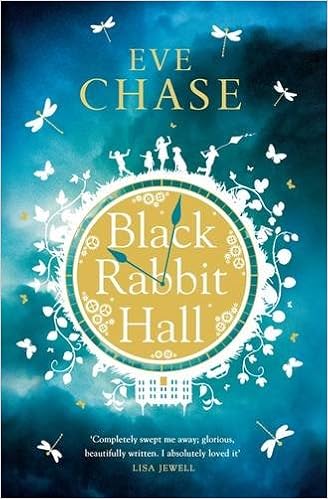
Black Rabbit Hall by Eve Chase

Review by The Quidnunc

The book definitely wasn't on my to-get-from-the-library plan but as I was about to leave the local branch something called me back just like Lorna was unexplainable drawn to  Black Rabbit Hall. I wondered for a bit in between the shelves trying to locate the source of the whisper that made the hairs on my neck stand. 
Minutes later there is was in its brand new cover, only 15 days settled in its new library home "The Black Rabbit Hall" by Eve Chase. Firstly, I succumbed to the cover - these days I have a thing for blue and dragonflies, I guess Irish has finally got my sane... almost sane brain. I barely made it home before opening the book. 
The novel is set in an idyllic Cornish home where nothing much happens... or so it seems. Pencraw or Black Rabbit Hall is the cross point of the two plot lines developed in the book, two tales alternating between 1960s summers, when Amber Alton and her relative occupy the home and a time a couple of decades later when Lorna, a bride-to-be is on her quest for a wedding venue and sets her mind on the Cornish mansion. 

The time goes "syrupy slow" and "nobody cares the clock are all set wrong" in this fairytale Cornish sanctuary... until a tragedy changes the lives of its inhabitants. Amber looses her mother to a tragic storm accident and nobody will ever be the same.
Hand to my heart the book made me obsessed for a day, That's how long it took me to read it. I caught up with the authors clues quite fast, though and the ending didn't get me unprepared, nevertheless it was a marvellous read, especially for the summer.  Eve Chase is a brilliant storyteller and I cannot but admit hearing Daphne Du Maurie's echo in between the the lines. I love "Rebecca" and if you love Rebecca, as well, I ensure you that "Black Rabbit Hall" will leave you charmed and smiling for the rest of the week.

Monday, July 13, 2015

London Belongs to Me by Norman Collins

Review by The Quidnunc

I have never been so afraid to read a book my entire life... Reason is the preface to one of the editions claimed that Norman Collins is a author of 16 novels and 2 plays in total, none of which was worth remembering or worth even mentioning... London Belongs to Me on the other hand is a "CRIME AND PUNISHMENT" MEETS "PASSPORT TO PIMLICO" type of novel that takes your breath away.
As a literature fanatic I feel tempted to call the novel Dickensian in scope, for it is centred around a family and the people who are drawn into their social orbit and is quite successful in providing an accurate account of London in the historical period. The plot begins month prior Christmas 1938 and the same festive occasion of 1940. The Jossers, an ordinary family of the lower middle classes, are the central characters, but the house in which they live, 10 Dulcimer Street, Kennington, is the equal core of the story.

We are introduced to the pliable Mr J on the day of his retirement when he is about to take leave of the City firm he has worked in as a ledger clerk for all his working life. He is clearly a nondescript sort of person who will be soon forgotten once he passes out the doors of the office for the last time. But he is on his way home to a family where he has a much more elevated status, and a small circle of neighbours, to whom he is an eminently respectable person.
For the time being the Jossers are keeping everybody afloat. As a counterpoint to Mr J’s sunny amiability, his wife is the keenly watchful matriarch who really holds the family together. Her eyes survey the boundaries of the family’s respectable status, which extend to her son Ted – pride and joy in himself but has rather let the side down by marrying Cynthia, a generic blonde beauty of the age, but whose social status was that of a mere cinema usherette. Ted has the prospect of rising to a better position as a manager in the Co-op, but his Cynthia-besotted status has opened up a vulnerable flank which Mrs J is ever alert to.
In the background there is London itself. It is a smaller city in size than the one that exists today, with the feel of the countryside still being just about there in places like Crouch Hill. But it has a larger population, with 8 million crammed into its boroughs. Its clashing cultures of shabby wheeling and dealing contrast with the middle class aspirations of its clerks and secretaries, and not far away are the looming threats of a continent that might sent bombers across at anytime to blow it to pieces. Collins captures it all so well in this vibrant and funny novel.
At its best the book is a directed but unforced tour of aspects of British – English – culture during wartime: a world of “chimney pots and telegraph wires”, of Bakelite and green baize, of séances and boxing matches (“The Tiger entered the ring in his celebrated striped dressing gown, allowed his seconds – two bullet-headed thugs like escaped convicts – to disrobe him as though he were too well-bred to do that kind of thing for himself, and stood there, like a cockerel, turning himself about for the people to admire him”), and of Lyons’ Corner Houses and miserable London weather, where “it was as though someone had deliberately smeared a wet dirty cloth across the sky”.The appeal of London Belongs to Me is in its easy fluency and compelling serial storylines, and in its satisfying representation of a place and time which feels nostalgic but was written as contemporary reporting. Collins lacks the edge of Patrick Hamilton or Julian Maclaren-Ross, but the book has a charm and warmth which goes beyond the not insignificant achievement of simply writing a 700-page book without cocking it up. Maybe that’s what E.M. Forster meant.

Twenties Girl By Sophie Kinsella

Review by The Quidnunc


Sophie Kinsella’s books have been on my LML pile for a long time ever since last September when I moved to London, I thought that it would be a nice  touch to read a local author.

Twenties Girl is one of her stand-alone novels: a sweet story that will make you more sensible about your older relatives and how they feel when they are getting old. You are going to have a good laugh through the entire book and it will make you think about Sadie every time someone says “There is a voice in my head!”
Twenties Girl is the story of 27 years old Lara and her 105 year old Great Aunt Sadie. It begins with Sadie’s funeral when any of her relatives can say a thing about Sadie’s life. She had a stroke in the 80’s and since then she lived in a Nursing Home –for 29 years-. Her 23 year old ghost is aghast because she can’t find her necklace and she is going to be cremated without it, she needs it to find peace and “move on”, that’s when she discovers that there is someone that can hear her: her great niece Lara.


Lara is a daydreaming 27 year old girl whose life is falling apart, her business partner and best friend fled to Goa and let her with a business that she doesn’t know how to run, her boyfriend broke up with her without any explanation and her family is breathing down her neck all the time worrying about her life. Obviously, when Sadie starts talking to her and demanding for her to search for her necklace she thinks that she is going mental. From that point on Kinsella takes you on a rollercoaster ride of emotions: you go from annoyed because you feel like you want to murder Sadie (a Ghost) and her childish demands, to melancholic because you wish for Sadie to get her HEA.


I have -almost- anything but praises for the characters of this book, Sadie is beautiful, vibrant, openly honest and yes annoying; her inner strength goes beyond death and teaches you how to live wholeheartedly. Lara is like every other Sophie’s heroine, extremely funny, with dancing problems and a tendency to lie.


Lara’s family was filled with fun characters. Her Dad is a sweet guy, full of good advises and a heart of gold. And her mom, oh God her mom! I wish there were more scenes with her, she is hilarious, is the kind of person that is really apprehensive about life in general, take this part of the book when Lara in phoning home:
I dial the number, lean back, and wait for Dad to pick up. (Answering the phone makes Mum anxious, because it might be kidnappers.)”
Then we have Uncle Bill, the multimillionaire entrepreneur that started a Café’s franchise like Starbucks with only two coins, he now has a book and runs seminars coaching people on how to start a business from scratch, needless to say he is a self-absorbed ugly person that I’m sure you won’t like.


Both Lara and Sadie have love interests in this novel, some of them from the past and a particular one from the present. Sadie led Lara to discover a new and healthy relationship that made her realize that life just happens and some things are not meant to be. Ed, their “Daddy-O”, is a big part of the story, in some ways he is a bridge to more heartbreaking and wonderful things


In general, the plot is interesting but the narrative is what makes this a wonderful story. Is a quick read full of scenes worth re-reading, is a story about love, family and doing something worthwhile with your life. Although, I was quite sceptical about this novel - being a chick-lit I had my prejudice- I admit I was wonderfully surprised by the way it touched me. Sadie reminded me so badly of my best friend that I couldn't but shed a tear when she finally found her rest. If there is something sure about this novel, is that you are going to have a whole range of feelings for these characters.

Wednesday, June 3, 2015

White Teeth by Zadie Smith

 Review by The Quidnunc


 I begin my journey around literary London with a novel that stirred a considerable amount of discussions not only in the UK but all over the world. I admit I haven’t read it prior to this project and it left me with the same mixed feelings it left quite a lot of us.

The book itself was published a good 10 years and a bit ago and was instantly marked as a modern classic. The author, then the 24-year-old, graduate from Cambridge Zadie Smith instantly was compared to Salman Rushdie… a comparison as much as can I agree with, I can also define as a prize given way too early to a rising literary star.

There were a couple of literary parallels that I drew from the very first paragraphs of the novel. The first one was quite obvious, as many other critics drew it as well. It was with Middlesex by Jeffrey Eugenides, but the second one was quite surprising even to me – The Gargoyle by Andrew Davidson. The later parallel was based more or less on the mechanical taste of following a recipe for writing the book left me with. But on that matter I will elaborate a little bit later.

On the whole it is with a huge sigh of relief that I can say that White Teeth bites indeed with ease on the problems of contemporary society, echoing perfectly the voices and problems of the average immigrants like myself. Its religious references draw a masterpiece of understanding of the acceptance and the idea of make-pretend life that most immigrants come with to the huge metropolis. In its various manifestations the book can be characterized as an immigrant novel, a family drama, pro- or anti-religious satire, but in its essence it is written as very mature life story - such as it is, without frippery, no idealistic impulses without search lessons and revelations.

On its pages we get familiar with lives of three families, all of them flawed just like regular families, all of them close to us, almost as if we have their members mixed with our own kin. Six parents keep together seven children – six boys and a girl – robbing them of all freedom and defining them by culture and family standards as they were defined themselves by the metropolis. As I look back to the book I cannot but keep wonder how did Smith manage to intertwine so flawlessly all events – internally logical or not – to show how every single character evolved and transformed through this 50-year span of the plot.


Loosely sketched, the lines begin to build so - collecting almost committed suicide on the front pages of British Archie big, confused Jamaica Clara, grown in heavily distorted religious family of Jehovah's Witnesses waiting for decades how every moment will come the end of the world when we take power with Jesus and sinners will be buried. Archie brings strong with Samad, a native of Bangladesh who have bizarre experiences of the Bulgarian-Greek bond during the Second World War, and they start living your own life in a strange pub, where time has stopped, new people do not enter, and no change is an appreciated constant. Samad is married to Alsat, exuberant and powerful woman who is promised even before birth. Both families are in constant dependence from one another and have children the same age - Eyre, the daughter of Archie and Clara, and twins Milan and Majid of Samad and Alsat. Gradual detachment from reality causes Samad to sink into the obsession with his supposedly heroic ancestor, trying to change the community around themselves in their own perverse measures, and even to kidnap one of his sons and send him back to Bangladesh to continue the traditions of the family.

Somewhere in between the whirlwind Zadie Smith introduced the last piece of the puzzle, perhaps a little too late, but giving solidity of the whole structure - the family of Marcus and Joyce Chalfan, idyllic formation with four sons, total internal confidence, self-reliance throughout the world, almost perfect example of a loving family parents who follow their vocation, one in botany, the other in genetics and simultaneously fail to educate their children in their own image almost to caricature degree. In this perfect microcosm crumbling at the edges because of entropy, Eyre and invaded Milan, overturn everything upside down. Swamp of colorful characters, mutual need and mutual hatred, unconscious sexuality and misunderstood psychological dependencies ... three families become inseparable in a veritable amalgam of aspirations, desires and frustrations. Like a modern Adam’s family they both serve as pointers to the flaws of society but also trigger some empathy. What makes them so approachable to the modern immigrant and person is that like most of us they have surrendered themselves to destiny.

I definitely loved the novel for its multiple religious, pop cultural and literary references and also for its amazing sense of humor (after all I am a serious Neil Geiman and Douglas Adams fan.) I admire its writing style and its ability to use ordinary clichés as a starting point to a journey whose end is unforeseeable. But most of all I loved White Teeth for portraying London as a stripped ex-colonizer that became a top migration destination and a melting pot that leads the way to a new world of mixed cultures and traditions.

The stories of Archie and Samad are stories of hope and impossibility, redemption and damnation, of being similar but somehow different and polar. As an immigrant myself, I see White Teeth as a very decent portrait of the average person trying to build a home in a world where nobody truly belongs, and if it wasn’t for the ups and downs in the plot’s pace and for the too predestined outcomes it would have deserved the prize it got from all those critics. Personally, though, White Teeth just needed a pinch more to be a grand masterpiece and to touch my heart.